

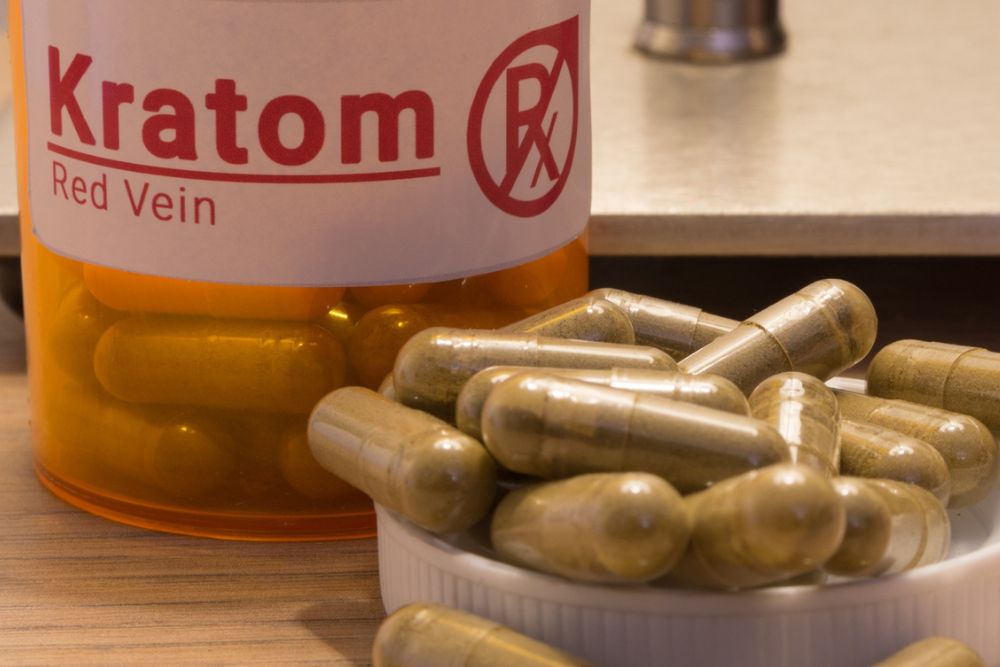
Kratom has grown in popularity across the U.S. as a plant-based product that some people use for increased energy, pain relief, or relaxation. Derived from the leaves of the Mitragyna speciosa tree native to Southeast Asia, kratom has stimulant-like effects at lower doses and opioid-like effects at higher doses. While many consumers perceive it as a natural alternative to prescription medications, health officials continue to warn that regular use can lead to dependence, addiction, and serious health risks.
In recent years, concerns have also expanded beyond traditional kratom products to include those with concentrated 7-hydroxymitragynine (7-OH). Sold in the form of tablets, gummies, liquid shots, and extracts, they often contain much higher concentrations of the active alkaloid than naturally occurs in kratom leaf. Federal and state agencies have issued multiple warnings about their potential dangers. The U.S. Food and Drug Administration (FDA) also states that there are no FDA-approved drug products containing kratom, its active ingredients, or 7-OH, and the agency continues to warn consumers about products marketed with unproven medical claims.
What Are the Warning Signs of Kratom Addiction?
The effects of these products vary depending on the amount, product potency, and a person’s tolerance:
- At lower doses, users commonly report feeling more alert, energetic, talkative, and motivated, with mild feelings of euphoria.
- As the dose increases, the effects become more sedating and opioid-like, often producing deep relaxation, pain relief, a sense of calm, and a floating or heavy-body sensation.
Some people also describe feeling emotionally detached or unusually content, while others experience dizziness, nausea, constipation, dry mouth, sweating, or itching. The heightened potency of 7-OH products can increase the risk of impaired judgment, drowsiness, and respiratory depression.
This substance use disorder often develops gradually. Someone may begin using the drug occasionally for pain relief or mood enhancement but later find that they need larger or more frequent doses over time.
Common symptoms of dependency include:
- Using kratom every day or multiple times per day.
- Needing increasingly larger doses to achieve the same effects (tolerance).
- Experiencing cravings or feeling unable to stop using.
- Spending excessive money on kratom products.
- Continuing to use despite relationship, work, or financial problems.
- Hiding or lying about kratom use.
- Feeling anxious, irritable, or sick when attempting to quit.
Physical dependence can also develop with long-term use of kratom and 7-OH products. According to the Texas Department of State Health Services, withdrawal symptoms may include:
- Seizures
- Insomnia
- Irritability, aggression, or hostility
- Emotional changes
- Jerky movements
- Gastrointestinal distress
Quitting without professional support compounds these effects.
The Growing Concern Over 7-OH Products
While 7-hydroxymitragynine naturally exists in kratom leaves in only trace amounts, manufacturers have developed products containing concentrated or enhanced levels of the compound. In July 2025, the FDA issued warning letters to multiple companies marketing products containing 7-OH. The agency stated that these products are not lawful dietary supplements, cannot legally be added to foods, and are not approved drugs. Officials warned consumers that concentrated 7-OH products have not been proven safe or effective and are frequently marketed with unsupported claims for pain relief or anxiety treatment.
Federal regulators have also taken additional action. In July 2026, the U.S. Drug Enforcement Administration (DEA) announced plans to temporarily place high-potency 7-OH products and certain related substances into Schedule I of the Controlled Substances Act, citing concerns about tolerance, dependence, addiction, and threats to public safety.
Are Kratom and 7-OH Products Legal in Texas?
Texas remains one of the states where kratom is generally legal for adults. However, lawmakers have continued to debate stronger regulations, particularly surrounding concentrated extracts and synthetic or highly processed products. It’s critical to note that legality doesn’t necessarily indicate safety, and regulatory requirements continue to evolve as new products enter the marketplace.
When Is It Time to Turn to Great Oaks for Kratom Addiction?
If kratom or 7-OH use has become difficult to control, you don’t have to wait until you hit the proverbial “rock bottom” before getting the help you need. Medically guided detoxification and rehabilitation make recovery safer and more successful. Treatment options vary depending on the severity of dependence, but at Great Oaks Recovery Center outside of Houston, Texas, your continuum of care plan includes numerous evidence-based and holistic methods to help you design a purposeful life of long-term recovery. Our board-certified medical team provides customized, whole-person care solutions such as:
- Medical evaluation and supervised withdrawal management
- Outpatient addiction counseling
- Cognitive behavioral therapy (CBT)
- Intensive outpatient or residential treatment programs
- Treatment for co-occurring anxiety, depression, or substance use disorders
- Ongoing peer support and relapse prevention planning
With appropriate medical care, counseling, and long-term support, recovery from kratom or 7-OH dependence is possible. Early intervention reduces health risks, improves your quality of life, and helps you regain control before addiction becomes more severe. To learn more about how we’ll help you move forward, reach out to our admissions team today.