
If you’ve ever wished you could quiet racing thoughts, sleep more soundly, or simply feel calmer during a stressful day, meditation may be one of the most valuable skills to learn. While meditation has been practiced for thousands of years, modern science confirms what practitioners have long believed: taking just a few minutes each day to train your attention improves both your mental and physical well-being.
The best part? You don’t have to “empty your mind” or sit perfectly still for an hour. Meditation is a practice—not a performance. Every time you gently bring your attention back to the present moment, you’re strengthening the ability to manage stress, focus your mind, and respond thoughtfully instead of reacting automatically.
How Is Meditation Helpful?
According to the National Center for Complementary and Integrative Health (NCCIH), mindfulness-based meditation may be as effective as some established therapies for reducing anxiety and depression in many people. Researchers also note that meditation may improve pain management, sleep quality, and overall quality of life, although results vary depending on the type of meditation and the individual.
NCCIH notes that one reason meditation works is that it changes how you relate to your thoughts. Instead of becoming caught up in worries about the future or regrets about the past, you learn to notice thoughts without immediately reacting to them. Over time, this helps lower your body’s stress response and improve emotional resilience. The American Psychological Association also explains that mindfulness meditation has been shown to positively influence both brain function and physical health by reducing the effects of chronic stress.
5 Easy Ways to Learn to Meditate
Remember there’s no “perfect” way to start—and not all methods may be to your liking. Experiment with different techniques until you find one that feels natural.
1. Mindfulness Meditation
This is one of the simplest forms to learn.
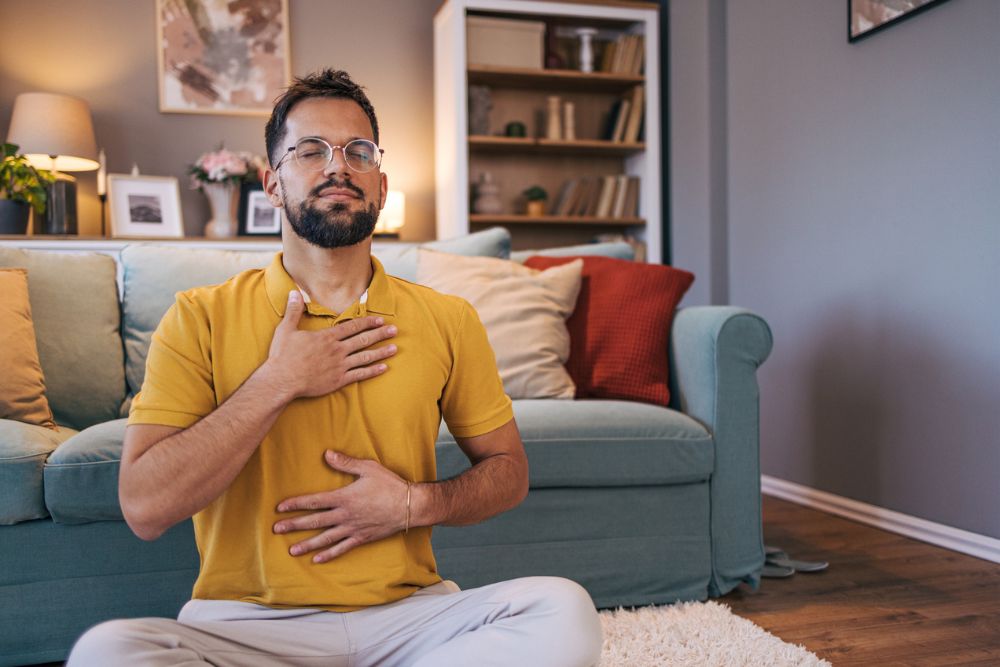
- Sit comfortably and focus your attention on your breathing.
- When your mind wanders—and it will, and this is normal—simply notice the distraction without judging yourself and gently return your focus to your breath.
- Start with a 1-minute practice, work your way up to 5-minutes, and then see how it goes from there.
Why it helps: You train your brain to stay present instead of becoming overwhelmed by stressful thoughts, improving emotional regulation and reducing anxiety.
2. Breathing Meditation
Sometimes called focused breathing, this technique involves paying close attention to each inhale and exhale.
- You might count to four while breathing in, hold briefly, then exhale slowly.
- You could also expand on this with a form of box breathing: inhale for a count of 2, hold for 2, then exhale for 2.
- Eventually, you can try box breathing with a 4-count breath at each interval.
Why it helps: Slow, controlled breathing activates your body’s relaxation response, lowering your heart rate and reducing feelings of stress. Here are more breathing techniques you can try.
3. Body Scan Meditation
This is another great method to help you become more present and release thoughts in a more direct way.
- Lie down or sit comfortably and slowly bring your attention to different parts of your body, beginning with your toes and moving upward. The U.S. Department of Veterans Affairs offers this helpful script to review.
- Notice sensations without trying to change anything.
- When you reach the top of your head, inhale deeply, then sigh out the breath through your mouth.
Why it helps: You become more aware of where you carry tension and learn to relax muscles you may not even realize are tight. Many people also find body scans helpful before bedtime.
4. Loving-Kindness Meditation
Instead of focusing on your breath, you silently repeat phrases such as:
- May I be healthy.
- May I be peaceful.
- May I be safe.
Then gradually extend these wishes to family members, friends, strangers, and even people you find difficult.
Why it helps: Research suggests this practice increases positive emotions, compassion, empathy, and social connection while decreasing negative emotional reactions.
5. Walking Meditation
Meditation doesn’t require absolute stillness. Here’s a completely different approach:
- During a slow walk, focus on each step, your breathing, and the sensations of your feet touching the ground.
- If your attention drifts, simply return your awareness to your movement.
- You can try this approach anywhere, whether on a sidewalk, in a park, on the beach, or in a labyrinth.
Why it helps: Walking meditation is especially useful if sitting quietly feels uncomfortable. It combines gentle physical activity with mindfulness, making it easier for many people new to meditation to stay focused.
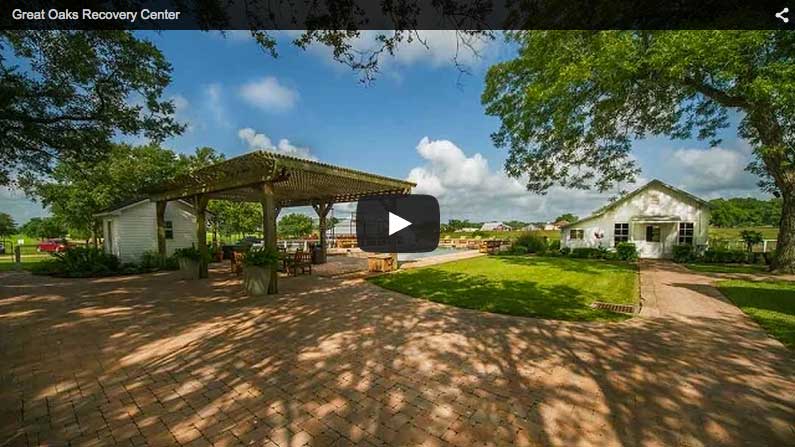
Learn to Thrive at Great Oaks Recovery Center
You don’t need an hour each day to experience meditation benefits. Simply choose the same time each day—perhaps before breakfast or before going to bed—to build consistency. Over time, you may naturally increase your sessions to 10, 15, or 20 minutes.
It’s also important to adjust your expectations. Meditation doesn’t eliminate stress or prevent difficult emotions. Instead, it helps you respond to life’s challenges with greater awareness and calm. Some sessions will feel peaceful, while others may feel restless. Both experiences are completely normal and part of the learning process.
As your practice grows, you may notice subtle changes. You may become more patient in traffic, less reactive during disagreements, sleep better at night, or recover more quickly after stressful situations. These small improvements often add up to meaningful long-term changes in your overall well-being.
At Great Oaks Recovery Center outside of Houston, Texas, our board-certified professionals provide numerous evidence-based and holistic methods to help you heal from alcohol and drug addiction and co-occurring dis